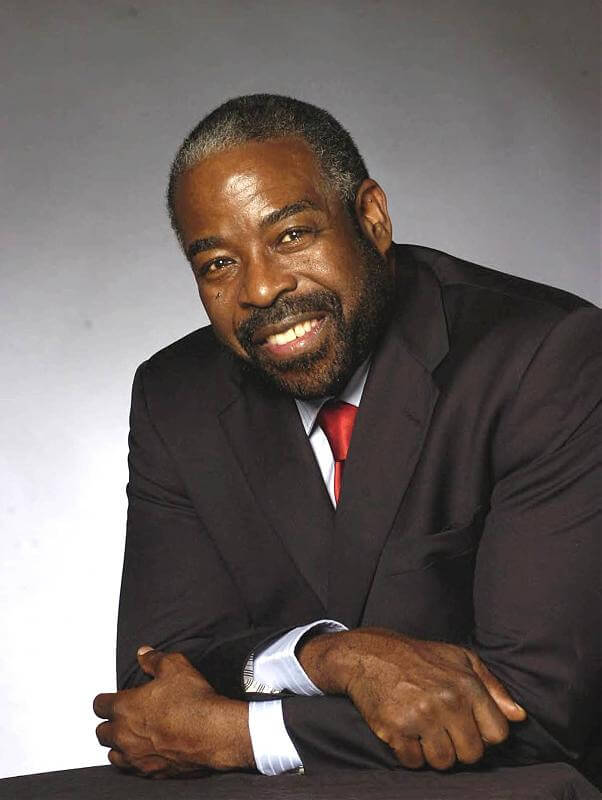

Most people think success requires a team of mentors, masterminds, and constant guidance. I never did. In this episode, I explain how I chose mentors, when they actually mattered, and why learning eventually shifts from being taught to being earned. If you’re serious about real growth, this will challenge how you think about learning, coaching, and experience.
[1:07] The One Mentor Strategy That Outperforms Any Mastermind:
- Depth in singular developmental relationships produces more concentrated growth than distributed guidance across many sources.
- Unfiltered honesty bypasses superficial guidance and accelerates developmental breakthroughs.
- Learning relationships naturally conclude when knowledge transfer reaches its inherent limit.
- Most available teachers occupy a competence tier below mastery in their domain.
- Teaching ability and elite execution rarely coexist at the highest levels of any domain.
- Personal cognitive and social wiring fundamentally determines optimal learning structures for growth.
[3:39] 2-Step Mentor Qualification System:
- Exceptional mentors hold understanding that extends beyond their published curriculum.
- Desire to learn from a specific teacher rather than merely the subject signals authentic mentor compatibility.
- Deconstructing one’s own work reveals both mastery and the capacity to transmit that mastery.
- Mastery eventually shifts the primary constraint from acquiring external knowledge to regulating internal state.
- The gap between a teacher’s execution ability and their instructional output determines mentorship value.
- Public resources serve as efficient filters before committing to personalized guidance relationships.
[10:05] When State Control Became My Only Mentor:
- State regulation becomes the primary determinant of performance once knowledge acquisition reaches diminishing returns.
- The magnitude of challenges scales proportionally with the scale of success.
- External responsibilities compound the psychological demands of high-stakes decision making.
- Mastery of craft eventually reveals unresolved internal patterns as the primary constraint on advancement.
- Past emotional imprints create persistent behavioral limitations independent of current technical competence.
- Self-sufficiency in a domain naturally terminates the functional need for external guidance.
- Psychological integration becomes the frontier of growth after technical mastery is achieved.
[12:27] Stop Using Coaches as Therapists:
- Experiential learning generates knowledge categories inaccessible through theoretical instruction alone.
- Implementation fidelity determines mastery velocity more than information quality or source prestige.
- Most guidance relationships function as emotional processing rather than catalysts for decisive action.
- Self-reliance emerges naturally after sufficient cycles of applied learning and real-world validation.
- The action-feedback loop transforms abstract understanding into embodied competence beyond conceptual grasp.
[14:40] Igor’s Book On Email Marketing:
Visit www.igorsbook.com to learn more.