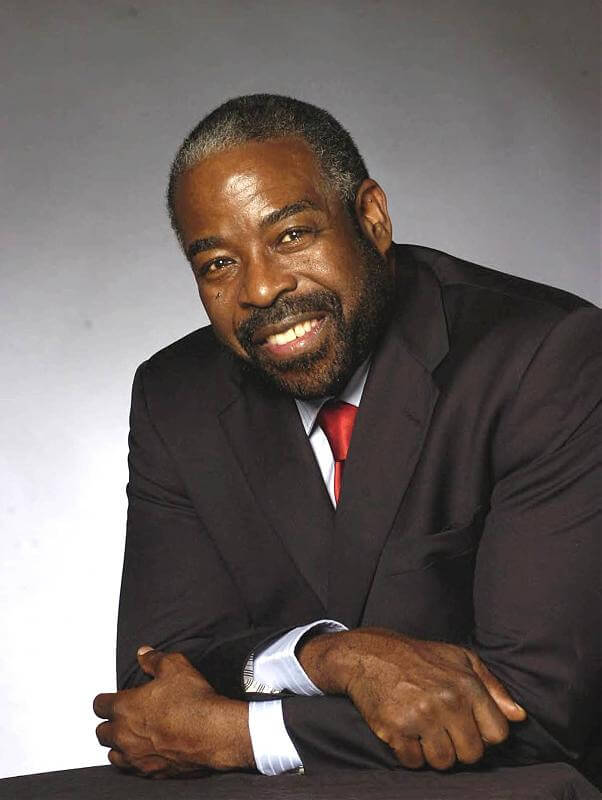

What if the biggest trap in online marketing isn’t the wrong strategy — it’s the debt you rack up trying to find one? Former unemployed, no-high-school-diploma, divorced-at-30 Eran Bucai didn’t just survive $55,000 in online marketing debt — he turned the chaos of learning into a thriving affiliate business, a sold-out membership community, and multiple software products. In this episode, you’ll hear why “tech debt” is the silent killer most gurus never warn you about, how a single December experiment sold 100 hours in five days, and what a self-feeding content machine looks like when you build it one support ticket at a time.
This one is for anyone who’s ever felt behind, overwhelmed, or buried under subscriptions they don’t fully understand — and needed proof that the mess can become the method.
Guest:
Eran Bucai is a super affiliate marketer, membership site founder, and self-described “tech superman” who clawed his way out of $55,000 in debt to build multiple full-time income streams online. With no high school diploma, no job prospects, and a borrowed stake in a doomed program, Eran reverse-engineered his way to freedom — first through service, then through community, then through software. He’s the founder of a thriving tech support membership that’s retained members for over four years, a YouTube channel with close to 1,000 tutorial videos, and a Chrome extension built to help email marketers reply faster. He’s the rare marketer who built everything on low-ticket, high-volume, and long-game principles — and has the recurring income to prove it works.
[00:52] What Is “Tech Debt” and Why It’s Silently Killing Beginners:
- Tech debt is both financial and skill-based — the hidden cost of not knowing what you don’t know when starting online.
- Most beginners underestimate the number of tools, platforms, and technical skills required just to launch a basic funnel.
- The depth of the hole only reveals itself once you’re already in it — no mentor or YouTube video can fully prepare you.
- Shiny object syndrome multiplies tech debt by splitting focus across too many tools and opportunities simultaneously.
- The 80/20 of online business is invisible to beginners — everything feels equally urgent and equally important.
[05:30] The $55K Debt Story: MOBE, Borrowed Money, and the FTC Shutdown:
- Eran entered the online marketing world through MOBE (Matt Lloyd), spending borrowed money from a friend to reach the top tier of their program.
- He generated approximately $145,000 in 14 months as a coach and affiliate — but travel, masterminds, and ad spend left $55,000 of borrowed debt unpaid.
- One morning, MOBE was shut down by the FTC — Eran had never heard the acronym before that day.
- Within a week, he secured a sales job in Sydney, working evenings and weekends on dropshipping, blogging, domain flipping, and ClickBank — the full beginner cycle.
- His paycheck structure forced ruthless discipline: $2,000 to debt, $1,200 to rent, $500 stretched for food, $100 for solo ads to keep building his list.
[13:00] The Low-Ticket Philosophy: Why Eran Chose Volume Over High-Ticket:
- Having been burned by high-ticket programs, Eran made a deliberate brand decision to position himself as “the low-ticket guy.”
- His emails lead with value — free tools, tutorials, and resources — with pitches appearing rarely and softly, which keeps subscribers around for years.
- Playing the longevity game means protecting the relationship over maximizing short-term revenue from any single email.
- Branding himself as having no high-ticket products or coaching creates an immediate trust signal that competitors can’t replicate.
- Multiple low-ticket income streams — affiliates, mini-courses, software, YouTube ads — can collectively exceed what a single high-ticket funnel produces.
[20:00] The Funnel Blueprint: How He Breaks Even on Cold Traffic:
- Front-end funnel structure: $5 course → $19 order bump → $97 upsell → $97 upsell → $77 subscription downsell.
- Cold Facebook ad traffic goes directly to the course funnel; the goal is to break even or better on ad spend.
- A free video series at the back of the funnel drives new buyers into his membership community — that’s where long-term monetization lives.
- Affiliate income and membership revenue are essentially pure profit because the self-liquidating offer covers the $150–$300/day ad budget.
- Organic value content (YouTube tutorials) drives the top of funnel; paid ads handle the conversion layer — two separate jobs, two separate channels.
[25:00] The $50/Hour December Experiment That Sold 100 Hours in 5 Days:
- Facing a slow December with no family nearby and a small list of under 2,000 subscribers, Eran emailed an offer: one hour of his time for $50, for any task, done live on Zoom.
- The constraint — all hours must be used in December — created urgency and kept the calendar full.
- He discovered that clients loved watching him build in real time: instant feedback, no revision cycles, websites completed two to three times faster than async work.
- The live Zoom model became the foundation of a scalable business concept — one that nobody else in the market was offering.
- He immediately shut down his two outsourced website builders and went all-in on the model, raising prices to $300, $500, $900, and $1,500 per session package.
[32:00] Launching the Membership: Under 24-Hour Tech Support for $55/Month:
- By April 2021, demand from post-session questions prompted Eran to launch a membership with a simple promise: email any tech question and get a reply within 24 hours.
- Launch funnel: $55/month → $99 order bump → $497 upsell for two additional one-on-one sessions.
- 110 members joined within two months; 60% took the order bump, 10% took the upsell — members from that original cohort are still active years later.
- Every support question was answered via a recorded tutorial video, creating a dual-use asset: instant support for paying members, evergreen content for YouTube.
- Members were promised access to every new product he released — templates, courses, tools — turning the membership into a continuously growing resource library.
[38:00] The YouTube Content Flywheel: How Support Tickets Became 1,000 Videos:
- Each member support question became a tutorial video: screen-recorded, clearly titled, published to YouTube with a membership CTA at the end.
- This built close to 1,000 videos on his channel without a dedicated content calendar — the membership generated the content strategy automatically.
- Over time, he exhausted common questions and now simply links to existing videos to answer new tickets — the system became self-sustaining.
- YouTube drives cold organic traffic into the funnel; the membership converts and retains; the content library keeps growing with each new product added.
- The model creates compounding returns: more members means more questions, which means more content, which means more discoverability.
[42:00] The Minimum Viable Tech Stack (What You Actually Need to Start):
- Domain name, professional email address (Google Workspace), and an email plus funnel software — that’s the full list.
- System.io is Eran’s top recommendation: $17/month, supports up to 5,000 subscribers, includes funnels, blogs, and automation.
- Total startup cost with annual domain and Google Workspace: roughly $200–$250 per year — everything else is optional noise.
- Even Amazon and Netflix use email marketing more aggressively than most online marketers — the channel is validated at the highest level.
- Owning your list is the only true de-risking strategy; every other platform — YouTube, social, even memberships — can be taken away.
[44:00] Eran Bucai’s Expertise:
Eran runs a tech support membership community where he helps online entrepreneurs conquer the technical hurdles blocking their business growth — from funnels and landing pages to software integrations and email setup.
Website: https://eranbucai.com/
Shortlinks: eran.link/dtc; eran.link/prettylinks.
[46:25] Igor’s Book On Email Marketing:
Visit www.igorsbook.com to learn more.