
You’ve been told to provide value. Give tips, share information, and educate your audience. And yet somehow, the people who do all of that still can’t get anyone to buy. In this episode, Igor sits down with Neil Gordon, author of The Most Powerful Sentence of All Time, to unpack the one methodology Igor has been quietly applying to everything he does for the past few months: webinars, emails, videos, books, and affiliate promotions. And once you understand what it is and what it actually does, you’ll never look at a headline, a webinar, or a VSL the same way again. This is not a tips episode. It’s a belief-shifting one. Which is exactly the point.
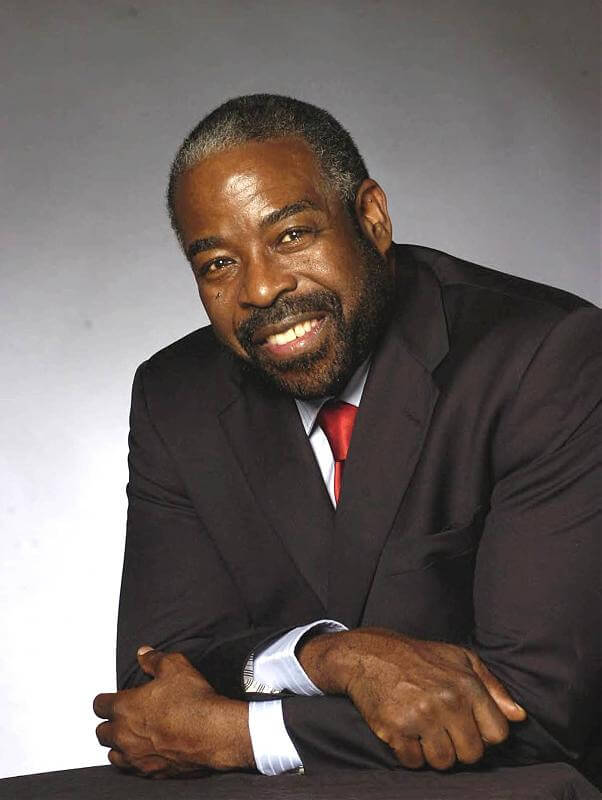
Guest:
Neil Gordon is the author of The Most Powerful Sentence of All Time, a business fable that teaches a single methodology for shifting what people believe is possible. He works with speakers, authors, and entrepreneurs to help them craft the one sentence at the heart of their idea that flips a switch in people’s minds and makes them buy in. His clients have used the silver bullet technique to cut webinar no-show rates from 30% to 2%, double VSL ROAS overnight, and unlock audiences that were previously impossible to convert. His book is available on Amazon.
[00:53] Why Information Is No Longer the Point:
- The belief that giving people more information will win them over is one of the most common and costly mistakes in marketing and public speaking.
- Information was already a commodity before AI. AI has made it so freely and instantly available that leading with it is now actively counterproductive.
- 99% of what any AI tool says is irrelevant to any specific person’s situation because it has no context about who they are or what they are going through right now.
- The goal of any great piece of marketing communication is not to inform. It is to convince someone that change is possible for them.
- Once a person believes change is possible, they buy in. They get chills. They have light bulb moments. They want to go further. That is the only outcome worth engineering.
[13:49] What a Silver Bullet Actually Is:
- A silver bullet is a cause and effect sentence. When you take this action, you get this outcome. That is the entire structure.
- Famous examples include “fortune favors the bold” and “happy wife, happy life.” Both are cause and effect. Both are singular. Both are impossible to misinterpret.
- The most common mistake is packing too many actions or outcomes into the sentence. The moment you add a second action or a second outcome, you lose the empowering effect entirely.
- Multiple elements create questions: are these equal in importance? Which one comes first? Is one foundational and the others optional? Those questions kill momentum.
- One action to one outcome simplifies things and creates a clear path forward. That clarity is what makes people feel empowered enough to move.
[15:57] How to Tell a Strong Silver Bullet from a Weak One:
- A strong silver bullet busts a commonly held belief and replaces it with an empowering idea that reframes how the problem should be solved.
- Dan Pink’s TED Talk on motivation is a masterclass in this. The flawed belief he busts: carrots and sticks motivate people to do better work. The silver bullet he reveals: the secret to high performance is not rewards and punishments, but the unseen intrinsic drive to do things because they matter.
- For maximum impact, a silver bullet should not lead the piece. It should be built up to gradually, revealed at a strategic midpoint after the audience has been primed with the problem, the failed approaches, and the case for a different way.
- The silver bullet is not a tagline. It is not a headline. It is the turning point of a talk, a video, a webinar, or an email, placed where it can do maximum work.
- Igor’s own silver bullet for his latest book: you do not need to be unique to build a successful online business. You just need a proven business model and someone to copy it from. That one idea resonated with four out of five people he tested it with before anything else did.
[39:14] Real Results — What Happens When You Put Silver Bullets in Your Marketing:
- Neil added a silver bullet to a VSL that had been following a templated format with mediocre results. ROAS doubled instantly and scaled consistently for the better part of a year.
- A webinar built around five silver bullets, one at the heart of each section, produced a cost per call of $33 versus the industry standard of $100 to $150.
- The same webinar produced a 2% no-show rate on booked calls versus the standard 20 to 30%. Out of approximately 400 calls booked, roughly six people did not show up.
- The reason is not a trick or an incentive. It is that when people genuinely believe change is possible for them, they show up. They want what comes next.
- Igor experienced the same pattern in reverse: a funnel he had spent hundreds of thousands of dollars optimizing over 16 months never moved buyers past their first $30 purchase. The message was not shifting beliefs. It was just selling.
[44:15] Where to Place the Silver Bullet and Whether It Expires:
- In a seven to ten minute VSL or mini webinar, the silver bullet belongs around the halfway point or just past it, after the problem has been established, the failed approaches have been named, and the case for a different solution has begun to build.
- Leading with the silver bullet occasionally works, but by and large it is more effective to allude to a revelation up front and build toward it rather than opening with it.
- Silver bullets based on human nature do not expire. Fight or flight, the need for autonomy, the desire for change: these have been true for 300,000 years and will remain true.
- Silver bullets based on technology or the mechanics of solving problems can expire. The Mongols’ silver bullet around horseback warfare was rendered obsolete by gunpowder. The same principle applies to any belief built around a specific set of tools or conditions that can change.
- The most durable silver bullets are the ones that start where the audience already is, acknowledge the pain they already feel, and then reframe the root cause in a way that makes the solution feel newly possible.
[51:33] Rapid Fire Questions:
- Does meeting people where they are matter? Always. You could have the most sophisticated understanding of the root cause of a problem, but if you start with your sophistication instead of their pain, you will lose them in the first minute.
- Do silver bullets work in emails? Yes. Igor has been applying the methodology to emails, webinars, videos, training programs, and books for months. The results have been consistent across every format.
- Can ChatGPT write your silver bullet? No. ChatGPT does not think like a copywriter. It mechanically produces copy. A silver bullet requires understanding what the person in front of you believes right now and what needs to shift. That is a human process.
[53:35] Neil Gordon’s Expertise:
- Book: The Most Powerful Sentence of All Time.
- Website: https://neilcanhelp.com/
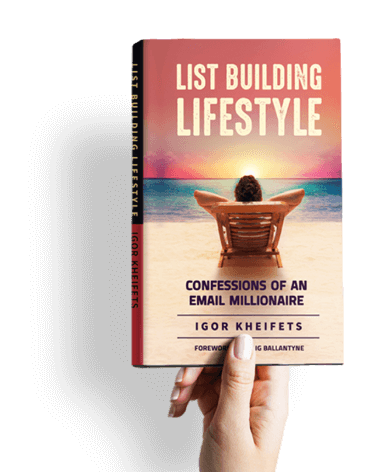
Get Igor’s Free Book — List Building Lifestyle: Confessions of an Email Millionaire
A great book for anyone who wants to build a responsive email list, create sales without relying on social media, and grow an online business with more leverage, freedom, and control. Inside, Igor breaks down the list-building and email marketing strategies that helped him turn email into a scalable income stream.
You’ll also get access to a full bonus package with templates, swipe files, and traffic strategies used to build and monetize lists fast.
Visit: www.igorsbook.com