
Igor reveals the truth about call-to-action design. After testing every combination, buttons, text links, P.S links, and top banners, he explains why contextual hyperlinks outperform buttons and why optimizing for sales, not clicks, is the real key to profit.
[1:14] How to Structure Your Email for Sales:
- Optimizing for sales, not clicks, yields more meaningful business outcomes.
- Multiple, strategically placed calls to action within a single message outperform a single call-to-action.
- Contextual hyperlinks integrated naturally into the content drive higher conversion than isolated or generic buttons.
- Testing variations in placement, format, and frequency of calls to action is essential to uncover what maximizes revenue.
- Contextual hyperlinks embedded within relevant content perform better because they require engagement with the message to be understood.
- Effective calls to action blend naturally into the narrative, rewarding attentive reading rather than relying on disruptive or generic prompts.
- A clear, direct call-to-action at the end of the message reinforces intent and provides a final, unambiguous next step for the reader.
[3:06] A Simple Formula for Email Success:
- There is no universally optimal call-to-action format, different approaches work for different audiences and communication styles.
- Contextual links woven into storytelling or narrative content align the offer with the reader’s engagement, making the CTA feel organic rather than interruptive.
- Placing a clear, direct call-to-action at the end of the email (and often in the PS) ensures the final impression is action-oriented, capitalizing on residual attention.
- Visual formatting (buttons vs. hyperlinks) alone does not guarantee higher performance; relevance, placement, and context outweigh superficial design changes.
- Understanding audience behavior informs strategic placement, but personal testing trumps imitation of others’ tactics.
[4:23] The Dangerous Clickbait Trap:
- Optimizing for clicks can incentivize misleading or manipulative tactics that inflate engagement without genuine buyer intent.
- High click volume does not translate to revenue if the audience arrives without alignment to the offer or purchasing mindset.
- Earnings per click is a more reliable indicator of email performance than click-through rate alone.
- Prioritizing sales over clicks fosters honest, value-driven messaging that attracts qualified leads rather than casual clickers.
- Email content should function as a pre-qualification tool, addressing objections, reframing perspectives, and building conviction, not merely as a click generator.
- Fresh, contrarian, or provocative angles can reignite interest in familiar topics and disrupt complacency among readers.
[5:20] How To Re engage Your Audience:
- Reminder emails, though simple, play a critical role in converting procrastinators by reinforcing urgency and availability over time.
- Persistent, repeated communication is often necessary to overcome buyer inertia and move prospects from consideration to action.
- Shifting optimization focus from clicks to sales aligns messaging with revenue outcomes and encourages integrity in copy and offer alignment.
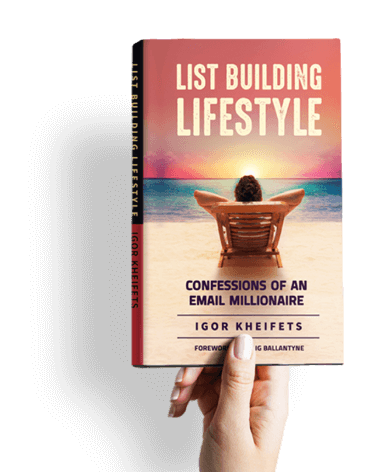
[6:53] Igor’s Book On Email Marketing:
Visit www.igorsbook.com to learn more.